
Digital X-Rays in Parma, OH
See What’s Hidden and Catch Dental Problems Before They Become Painful
Some of the most serious dental problems develop where you can’t see them—between your teeth, inside the roots, beneath the gumline, and deep within the bone. Digital X-rays in Parma at Glacial Dental help us find these problems early. By the time these hidden issues cause pain or become visible, they’ve often progressed far beyond the early stages when treatment is simplest. That’s why digital X-rays are such a valuable part of your dental care at Glacial Dental.
Dr. Michael Alsouss, DDS uses advanced digital radiography to detect problems that would otherwise go unnoticed, allowing for earlier intervention and better outcomes. For patients throughout Parma and the Greater Cleveland area, this technology means more accurate diagnoses, less radiation exposure, and a clearer understanding of what’s happening inside their mouths.
Digital X-rays have transformed dental diagnostics. They provide instant, high-resolution images that can be enlarged, enhanced, and analyzed in ways that traditional film X-rays never could. When Dr. Alsouss can see exactly what’s going on beneath the surface, he can create treatment plans that address problems at their source rather than just managing symptoms.
How Digital X-Rays Work
Digital radiography uses the same basic principle as traditional X-rays—a small amount of radiation passes through your teeth and surrounding structures, creating an image based on how different tissues absorb that radiation. Dense structures like tooth enamel and bone appear lighter on the image, while softer tissues and areas of decay appear darker.
The key difference is how the image is captured. Instead of exposing photographic film that must be chemically developed, digital X-rays use an electronic sensor to capture the image directly. This sensor connects to a computer, and the image appears on a monitor within seconds of exposure.
The process is quick and comfortable. You’ll bite down on a small sensor while our team positions the X-ray unit next to your cheek. You’ll hear a brief beep, and the image instantly appears on the screen. The entire process takes just a few seconds per image, and most patients find it no more uncomfortable than having their photo taken.
Why Digital X-Rays Are Safer Than Traditional Film
One of the most significant advantages of digital X-rays is dramatically reduced radiation exposure. Digital sensors are far more sensitive than photographic film, which means they require much less radiation to produce a clear image. Patients at Glacial Dental receive up to 90 percent less radiation compared to traditional X-rays.
To put this in perspective, the radiation from a set of digital dental X-rays is comparable to the background radiation you’d receive during a short airplane flight or a day spent outdoors. It’s a tiny fraction of the radiation from a medical CT scan or even a standard chest X-ray. While we always follow the principle of keeping radiation as low as reasonably achievable, digital technology has made dental X-rays safer than ever.
We also use lead aprons and thyroid collars during X-rays as an additional precaution. These shields block any scattered radiation from reaching other parts of your body. For patients who are pregnant or think they might be pregnant, please let us know—while dental X-rays are generally considered safe during pregnancy when necessary, we can often postpone routine imaging until after delivery.
What Digital X-Rays Reveal
The images produced by digital X-rays show Dr. Alsouss things that simply aren’t visible during a visual examination. This hidden information is often critical for accurate diagnosis and effective treatment planning.
Cavities between teeth are one of the most common findings on dental X-rays. These interproximal cavities form in the tight spaces where your teeth touch—areas that are impossible to see directly and difficult to clean even with diligent flossing. On an X-ray, decay appears as a dark shadow within the tooth structure. Catching these cavities early means they can be treated with simple tooth-colored fillings before they grow large enough to require more extensive treatment.
Infections at the root tips of teeth show up clearly on X-rays as dark areas in the bone surrounding the root. These infections often develop when decay reaches the inner pulp of a tooth and bacteria spread down through the root canal. Without X-rays, these infections might not be diagnosed until they cause significant pain or swelling. Early detection allows for root canal therapy before the infection spreads or causes bone damage.
Bone loss from gum disease is another important finding. Healthy bone surrounds your tooth roots and holds them firmly in place. When periodontal disease destroys this bone, teeth become loose and may eventually be lost. X-rays show the level of bone around each tooth, allowing Dr. Alsouss to assess the severity of gum disease and monitor whether treatment is working.
Impacted teeth—teeth that are stuck beneath the gum or bone and can’t emerge properly—are visible on X-rays long before they cause problems. This is particularly important for wisdom teeth, which frequently become impacted. Identifying impacted teeth early allows for planned removal before they damage neighboring teeth or cause infection.
Types of Dental X-Rays
Different types of X-rays serve different diagnostic purposes. Dr. Alsouss will recommend the specific images needed based on your individual situation.
Bitewing X-rays are the most common type taken during routine checkups. You bite down on a small tab that holds the sensor in place while the image captures the crowns of your upper and lower back teeth on one side of your mouth. Bitewings are excellent for detecting cavities between teeth and checking the fit of existing fillings and crowns.
Periapical X-rays show the entire tooth from crown to root tip, including the surrounding bone. These images are useful when Dr. Alsouss needs to evaluate a specific tooth in detail—for example, if you’re experiencing pain in one area or if he suspects an infection at the root.
A full mouth series consists of multiple periapical and bitewing X-rays that together provide a comprehensive view of all your teeth and supporting bone. New patients typically receive a full mouth series so Dr. Alsouss can establish a complete baseline of your oral health. These images are also updated periodically for existing patients, usually every three to five years.
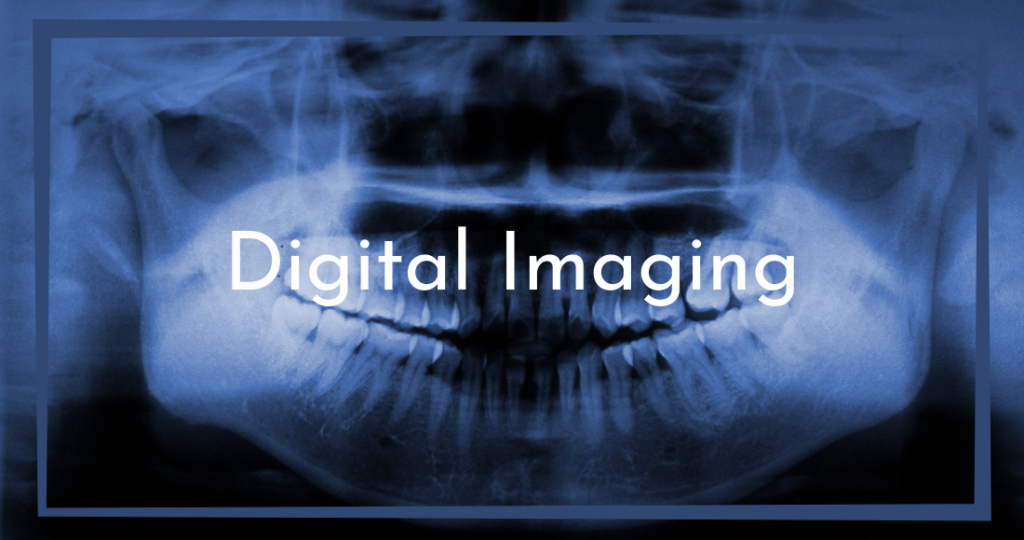
Panoramic X-rays capture your entire mouth in a single image, including teeth, jaws, sinuses, and temporomandibular joints. The X-ray machine rotates around your head while you stand still, creating a flat image of your curved jaw structure. Panoramic images are useful for evaluating wisdom teeth, planning implant placement, assessing jaw problems, and getting an overall view of your oral structures.
The Advantages of Instant Results
With traditional film X-rays, you’d have to wait while the film was developed in a darkroom—a process that took several minutes and sometimes produced images that weren’t quite right and needed to be retaken. Digital X-rays eliminate this delay entirely.
The moment the sensor is exposed, the image appears on the computer monitor. Dr. Alsouss can review it immediately, right there in the treatment room with you. If he needs a slightly different angle or wants to capture an additional area, he can take another image and see the results within seconds.
This instant feedback improves the quality of your care in several ways. There’s no waiting around wondering what the X-rays will show. Problems can be identified and discussed while you’re still in the chair. Treatment planning can begin immediately rather than at a follow-up appointment. And if you have questions about what you’re seeing on the screen, Dr. Alsouss can answer them in real time.
Enhanced Images for Better Diagnosis
Digital X-rays aren’t just faster than film—they’re also more versatile. Because the images are digital files, they can be manipulated in ways that film images cannot.
Dr. Alsouss can zoom in on specific areas of an image to examine them more closely. He can adjust the brightness and contrast to make subtle details more visible. He can compare current images side-by-side with previous X-rays to track changes over time. These capabilities help him catch problems that might be missed on a traditional film X-ray.
The ability to enlarge images is particularly valuable when explaining findings to patients. When Dr. Alsouss points to a tiny dark spot on a normal-sized X-ray, it might be hard to understand what you’re looking at. When he zooms in on that area and increases the contrast, suddenly the cavity or crack becomes obvious. This visual communication helps you understand why treatment is recommended and makes you a more informed participant in your own dental care.
How Often Do You Need Dental X-Rays?
The frequency of dental X-rays depends on your individual oral health status and risk factors. There’s no one-size-fits-all schedule—Dr. Alsouss recommends imaging based on what’s appropriate for your specific situation.
New patients typically need a comprehensive set of X-rays at their first visit. This usually includes either a full mouth series or a panoramic image plus bitewings. These baseline images allow Dr. Alsouss to assess your current oral health and identify any existing problems that need attention.
For patients with good oral health and low risk of dental problems, bitewing X-rays every 12 to 24 months are often sufficient to monitor for cavities between teeth. Patients with a higher risk of decay—due to a history of frequent cavities, dry mouth, or other factors—may benefit from more frequent imaging.
Children and adolescents often need X-rays more frequently than adults because their mouths are changing rapidly. X-rays help us monitor the development and eruption of permanent teeth and identify any problems early.
We follow guidelines from the American Dental Association when recommending X-rays, always balancing the diagnostic benefits against the goal of minimizing radiation exposure. You’ll never receive unnecessary X-rays at Glacial Dental. If Dr. Alsouss recommends imaging, it’s because he believes the information gained will benefit your care.
X-Rays and Your Dental Exam
Digital X-rays are an integral part of your comprehensive dental exam at Glacial Dental. While the visual examination tells Dr. Alsouss a great deal about your oral health, X-rays complete the picture by revealing what’s happening beneath the surface.
During your exam, Dr. Alsouss reviews your X-rays carefully, looking for any signs of problems. He examines each tooth for decay, checks the bone levels around your teeth, evaluates existing dental work, and looks for any other abnormalities. If he finds something concerning, he’ll show you the image and explain what he’s seeing.
This combination of visual examination and X-ray analysis allows for thorough, accurate diagnosis. Problems that might be missed by either method alone become apparent when both are used together. It’s one of the reasons why regular dental visits—not just cleanings, but comprehensive exams with appropriate imaging—are so important for maintaining your oral health.
Addressing Common Concerns About Dental X-Rays
Some patients have concerns about dental X-rays, and we’re happy to address them. The most common worry is about radiation exposure, which we’ve already discussed—digital X-rays use extremely low levels of radiation, comparable to everyday background exposure.
Another concern is whether X-rays are really necessary. While we understand the desire to minimize any medical procedures, the diagnostic value of dental X-rays is significant. The problems they detect—hidden cavities, infections, bone loss, impacted teeth—can cause serious harm if left undiagnosed. The small amount of radiation involved is far outweighed by the benefit of catching these problems early.
If you have specific concerns about X-rays, please discuss them with Dr. Alsouss. He’s happy to explain why particular images are recommended and how they’ll benefit your care. We never take X-rays just for the sake of taking them—every image serves a specific diagnostic purpose.
Digital Records and Easy Sharing
Because digital X-rays are computer files, they’re easy to store, organize, and share. Your images become part of your permanent dental record at Glacial Dental, available for comparison at future visits.
If you need to see a specialist or another dentist for any reason, we can easily share your X-rays electronically. This eliminates the need to retake images, saving you time, money, and radiation exposure. It also ensures that whoever is treating you has access to your complete diagnostic information.
Digital storage also means your X-rays won’t degrade over time like film images can. The images taken at your first visit will be just as clear and detailed years from now as they are today.
Technology That Puts You in Control
At Glacial Dental, we believe you should understand what’s happening with your oral health. Digital X-rays support this belief by making diagnostic information visible and accessible.
When Dr. Alsouss reviews your X-rays, you’ll see them too—right on the monitor in front of you. He’ll point out any areas of concern and explain what they mean in plain language. You’ll be able to ask questions and get answers while looking at the actual images. This transparency helps you make informed decisions about your dental care.
We’ve found that patients who can see their X-rays understand their treatment recommendations much better than those who simply hear a verbal explanation. When you can see the cavity or the bone loss or the crack in your tooth, the need for treatment becomes clear. You’re not just taking our word for it—you’re seeing the evidence for yourself.
Schedule Your Visit Today
Digital X-rays are just one example of how Glacial Dental uses modern technology to provide better care for our patients. Combined with thorough examinations and skilled treatment, advanced imaging helps us keep your mouth healthy and catch problems at their earliest, most treatable stages.
Dr. Michael Alsouss, DDS serves patients of all ages in Parma and throughout Greater Cleveland. Whether you’re due for a routine checkup or you have a specific concern you’d like evaluated, we’re here to help.
Schedule an appointment today and experience the difference that advanced diagnostic technology can make in your dental care. If you have questions about digital X-rays or any of our services, please contact us—we’re always happy to provide more information.
Glacial Dental
5500 Broadview Rd
Suite 100
Parma, OH 44134